

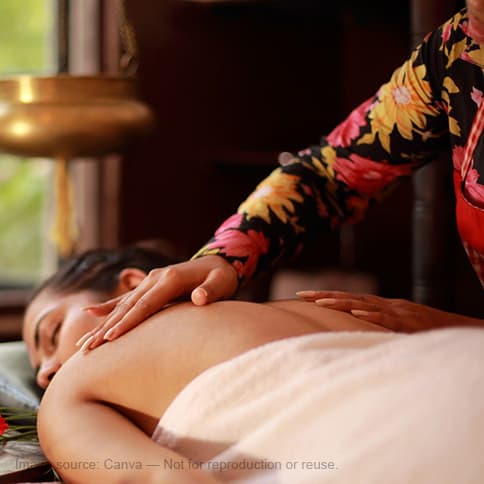
Some people come to Panchakarma because they feel tired in a way that sleep no longer seems to fix. Others come because they have been living with a health challenge for a long time and quietly feel that their body needs more support than it has been getting.
Both experiences matter, and both are part of what Panchakarma was traditionally created for.
One of the biggest misunderstandings about Panchakarma is that people often think it is only for relaxation or wellness. But in Ayurveda, it has always been something much deeper than that. For some people, it becomes a way to properly slow down, restore energy, improve digestion, and take care of the body before exhaustion turns into something heavier. For others, it becomes part of a longer healing journey while living with stress, inflammation, digestive issues, skin flare-ups, fatigue, hormonal imbalance, or other ongoing health challenges alongside existing medical care.
This is why the benefits of Panchakarma cannot really be explained in just one way. The experience is different depending on what your body has been carrying, and what kind of support it truly needs.
What Panchakarma Actually Is
Panchakarma is one of Ayurveda’s most well-known healing processes, but it is also one of the most misunderstood. It is not a quick detox, a spa package, or a weekend cleanse. In traditional Ayurveda, Panchakarma is a carefully guided process that helps the body release accumulated stress, exhaustion, and imbalance slowly and gently.
The word itself refers to five traditional Ayurvedic therapies used to cleanse, restore, and rebuild the body more deeply.
But for most people who actually go through it, the technical side is not really what stays with them. What stays with them is the feeling of finally having enough space and time to properly rest and be cared for. Many people describe noticing, sometimes for the first time in years, that they are no longer living completely in survival mode. That alone can feel like a huge shift.
Signs Your Body Might Be Ready for This
Sometimes the body asks for support very clearly, and sometimes it happens more quietly over time. You may recognise some of these feelings:
- Feeling tired even after sleeping well
- Digestive discomfort that keeps coming back
- Brain fog or difficulty concentrating
- Stress that feels like it stays in the body
- Waking up already feeling heavy or drained
- Feeling emotionally overwhelmed more easily than before
- Skin flare-ups connected to stress and lifestyle
- Feeling like your body no longer fully feels like itself
- Or simply feeling “fine” on the outside while quietly knowing something feels off underneath
From an Ayurvedic perspective, these are often signs that the body has been carrying more than it has had the chance to properly release.
The Benefits of Panchakarma
What Panchakarma offers depends a great deal on what you are coming to it with. The experience is genuinely different for someone navigating a health challenge than it is for someone who simply wants to give their body a deeper kind of restoration. Both are valid. Both are welcome. And the benefits, while they overlap in many ways, are worth understanding separately so you can recognise what Panchakarma might mean specifically for you.
For those seeking wellness and restoration
- A genuine reset for the body and mind
When you are not unwell but not quite thriving either, Panchakarma offers something that is hard to find elsewhere: a structured and deeply supported pause. Not a holiday where you are still half-connected to your life, but a real opportunity for the body to release what has accumulated quietly over months or years of just keeping going. - Steadier energy that does not need to be forced
Many people come to Panchakarma functioning well by most measures but relying on caffeine, stimulation, or sheer willpower more than they would like. After the process, energy tends to feel more natural and consistent, something that is simply there rather than something you have to manage around or chase. - Deeper, more restoring sleep
When the nervous system is given the conditions it needs to genuinely settle, sleep often changes in ways people do not expect. Falling asleep becomes easier, waking through the night becomes less common, and mornings start to feel like actual recovery rather than just the end of night hours. - A lighter, more easeful relationship with your body
Digestion tends to settle and become more comfortable. The body feels less reactive to everyday stress. There is a quality of ease in just going about life that is genuinely hard to describe but very recognisable once you feel it. Many people describe it as feeling more like themselves than they have in a long time. - Emotional calm and mental clarity
Panchakarma is not only a physical process. The combination of therapies, nourishing food, rhythm, and real rest tends to bring a softness to the emotional landscape as well. Things that usually feel heavy or overwhelming often feel more manageable. The mind feels clearer. There is more space between a feeling and a reaction.
For those navigating a health challenge
- Support that looks at the whole picture, not just the symptom
One of the most meaningful things Panchakarma offers to someone living with a health challenge is a different kind of attention. Rather than focusing only on what is visible or measurable, Ayurveda looks at digestion, stress, daily rhythm, sleep, and emotional wellbeing as one connected system. For many people, this is the first time they have felt genuinely seen as a whole person rather than a collection of symptoms to manage.
- Stronger digestion as a foundation for everything else
In Ayurveda, digestion is considered the root of overall health, and for someone dealing with a health challenge, supporting digestion is often where the most meaningful shifts begin. When the body is able to properly absorb nourishment and eliminate what it does not need, other systems tend to respond as well. Energy becomes more available. The body feels less burdened.
- Reduced frequency and intensity of flare-ups over time
For those living with chronic skin conditions, autoimmune responses, or stress-related health patterns, Panchakarma works gradually to address what is driving the body’s reactivity rather than only responding to each episode as it comes. This does not happen overnight, and it is important to be honest about that. But over time, many people notice that the difficult periods become less frequent and less intense.
- A body that feels less reactive and more resilient
Living with a health challenge often means the body is in a heightened state of sensitivity for long periods. Panchakarma, through its combination of therapies, rest, and nourishment, works to bring the nervous system and the body’s overall response down from that state of alertness. The body begins to feel less like it is always bracing for the next difficult moment.
- Emotional support for what the body has been carrying
Health challenges are not only physical, and Ayurveda has always understood this. The emotional weight of living inside a body that does not feel well, the grief, the frustration, the quiet exhaustion of managing something long-term, is real and it affects the body too. Panchakarma creates space for some of that to release alongside the physical work, and many people find that this is the part that stays with them most.
- Care that works alongside, not against, your existing treatment
Panchakarma does not ask you to step away from the medical care you are already receiving. It works alongside it, gently supporting the body’s own capacity to heal and recover while you continue with whatever treatment plan you are on. Responsible Ayurvedic care is always honest about this distinction, and at ASHAexperience, it is something our doctors take seriously.
Whether you are looking to restore what daily life has been slowly taking, or to support a body that has been working very hard for a long time, Panchakarma meets you where you actually are.
What Panchakarma Asks of You
It feels important to be honest about this too, because the wellness world is full of promises that do not hold up, and this audience deserves better than that. Panchakarma is not a quick fix, and it does not work the same way for everyone. Real Ayurvedic healing takes time, consistency, and guidance from experienced doctors who are genuinely interested in your life as a whole rather than just what is most visible on the surface.
The process also asks something real of you. It asks you to rest in a way that is deeper than you are probably used to. It asks for patience with a process that unfolds gradually rather than dramatically. It asks you to slow down and give the body the kind of attention you have probably been putting off for a long time. And perhaps that is part of why the experience feels so significant for so many people. Because it is one of the very few things that actually gives the body what it has been asking for, rather than asking it to push through once more.
Why Many People Choose to Experience Panchakarma in India
While Panchakarma can be experienced in trusted Ayurvedic centres in Europe, many people feel drawn to India because Ayurveda is still deeply woven into the fabric of daily life there in a way that is genuinely hard to replicate elsewhere. The pace feels different. The relationship to food, to rest, to healing and daily rhythm feels more natural and uninterrupted. And being removed from everyday responsibilities allows most people to fully immerse themselves in the process without constantly returning to stress in the gaps between treatments.
For some, it becomes more than a treatment. It becomes a pause that quietly changes the relationship they have with their own body, and that stays with them long after they come home.
A Gentle Note from ASHAexperience
At ASHAexperience, we know that people arrive at Panchakarma for many different reasons. Some are looking for deeper restoration before the body reaches complete exhaustion. Others are navigating long-term health challenges and searching for a more holistic and supportive approach alongside the care they are already receiving.
Our Ayurvedic doctors take time to understand your body, your lifestyle, your emotional wellbeing, and your daily rhythm as one connected picture. Panchakarma is always approached personally and carefully, never as a one-size-fits-all experience.
For some, the journey begins with small changes in daily life and grows from there. For others, it becomes a deeper healing journey through Panchakarma, either in India or in one of our trusted Ayurvedic centres in Europe.
Wherever you are in your healing journey, if you feel ready to explore whether Panchakarma could support you more deeply, you can speak with our team.