

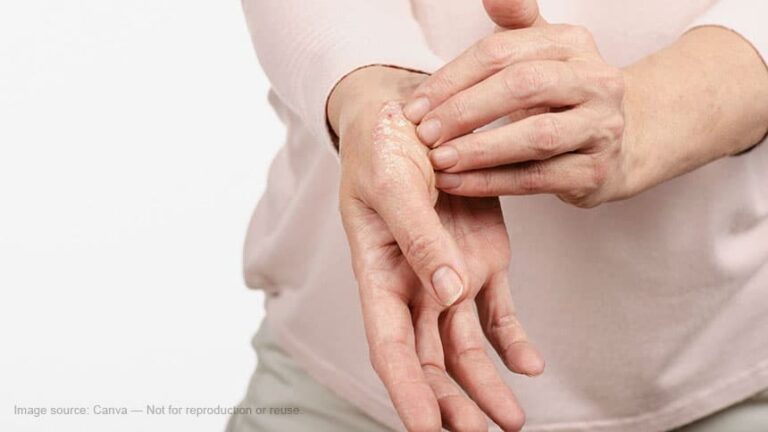
Psoriasis is a chronic inflammatory skin condition that can affect much more than the skin itself. Alongside appropriate medical care, some people living with psoriasis may choose to explore complementary approaches that support their overall wellbeing and quality of life.
Ayurveda offers one such perspective. Rather than focusing only on visible symptoms, the Ayurvedic approach considers the wider picture, including nutrition, digestion, daily routines, stress, and emotional wellbeing. These principles may offer additional support alongside the guidance and care someone receives from their medical professionals.
Read on to understand psoriasis from an Ayurvedic perspective and explore some of the traditional practices that may form part of Ayurvedic care.
What is Psoriasis?
Psoriasis is a chronic condition that affects the skin and causes skin cells to build up more quickly than usual. The condition can vary considerably from one person to another and may include symptoms such as dry or cracked skin, itching, scaling, and inflamed patches.
Some people with psoriasis may also develop psoriatic arthritis, which can affect the joints and cause symptoms such as pain, stiffness, and swelling.
Psoriasis can develop at different stages of life, and its severity and progression vary between individuals.
Psoriasis Signs and Symptoms
Beyond its physical symptoms, psoriasis can also affect a person’s quality of life. Living with a visible and sometimes uncomfortable skin condition may influence everyday activities, confidence, emotional wellbeing, and social experiences.
For this reason, supporting someone with psoriasis often means recognising the wider experience of living with a chronic condition rather than focusing only on what can be seen on the skin.
Understanding Psoriasis from an Ayurvedic Perspective
According to Ayurveda, skin health is understood in relation to the balance of the whole person. Traditional Ayurvedic principles consider patterns involving the doshas, known as Vata, Pitta, and Kapha, when understanding an individual’s constitution and overall wellbeing.
In Ayurvedic theory, different patterns of dosha imbalance may be considered when supporting someone experiencing skin concerns. Vata, for example, is traditionally associated with qualities such as dryness, while Kapha is associated with heavier and more stable qualities.
Ayurveda also uses the concept of Ama, traditionally understood as an accumulation associated with incomplete digestion or metabolism. From this perspective, factors such as digestion, nutrition, daily routine, and stress may all be considered when looking at the person’s wider wellbeing.
This is why the Ayurvedic approach can look different from one person to another. Rather than applying the same recommendations to everyone living with psoriasis, an Ayurvedic doctor considers the individual’s constitution, health, lifestyle, and circumstances before recommending appropriate forms of support.
Ayurvedic Practices That May Be Considered
Depending on the individual, a qualified Ayurvedic doctor may recommend certain traditional practices as part of a broader wellbeing programme. These may include:
Lepanam
Lepanam is a traditional Ayurvedic practice in which herbal preparations are made into a paste and applied externally to selected areas of the body. The ingredients used are chosen according to the individual’s needs.
Abhyanga
Abhyanga is a traditional Ayurvedic oil massage using oils selected according to an individual’s constitution and needs. It is commonly used in Ayurveda as part of a broader approach to relaxation and wellbeing. The oils and approach are selected according to the individual’s needs and skin condition.
Snehapanam
Snehapanam, or internal oleation, is a specialised Ayurvedic practice involving the supervised intake of medicated ghee or oils. The type, amount, and duration are carefully determined by an Ayurvedic doctor according to the individual’s constitution and needs.
Pizhichil
Pizhichil is a traditional Ayurvedic therapy involving the controlled application of warm medicated oils over the body. The approach is personalised according to the individual’s constitution and overall wellbeing.
Takradhara
Takradhara is a traditional Ayurvedic practice involving a specially prepared medicated buttermilk-based liquid that is gently poured over the body or specific areas.
Diet and Nutrition
Nutrition also forms an important part of the Ayurvedic approach. Dietary guidance may focus on supporting digestion and creating a way of eating that is nourishing and sustainable, rather than relying on one strict diet or a universal list of foods to avoid.
The Role of Panchakarma
Panchakarma is a traditional and deeply restorative Ayurvedic process involving a series of specialised practices. It is different from the general idea of a short-term or commercial “detox” and is traditionally used in Ayurveda as part of a broader approach to restoring balance and supporting overall wellbeing.
For some individuals living with psoriasis, an Ayurvedic doctor may consider Panchakarma as part of a wider, personalised approach to care. The programme is carefully planned according to the individual’s constitution, health, and needs, and is undertaken in an appropriate environment with professional supervision.
Rather than viewing Panchakarma as a cure for psoriasis, Ayurveda considers it as one part of a wider approach that may also include nutrition, daily routines, lifestyle practices, and ongoing support.
A Gentle Note from ASHAexperience
Living with psoriasis can be a deeply personal journey, and finding the right support often begins with feeling heard and understanding your wellbeing as a whole.
At ASHAexperience, our Ayurvedic doctors and practitioners work alongside nutrition professionals, yoga and meditation trainers to create a thoughtful and connected approach to wellbeing. Through personalised Ayurvedic guidance, we help you explore the practices and daily changes that may best support your individual journey.
If you feel ready to understand your body more deeply and explore how Ayurveda may support your wellbeing alongside the care you already receive, speak with our team. We are here to listen and help you find an approach that feels personal, thoughtful, and sustainable.